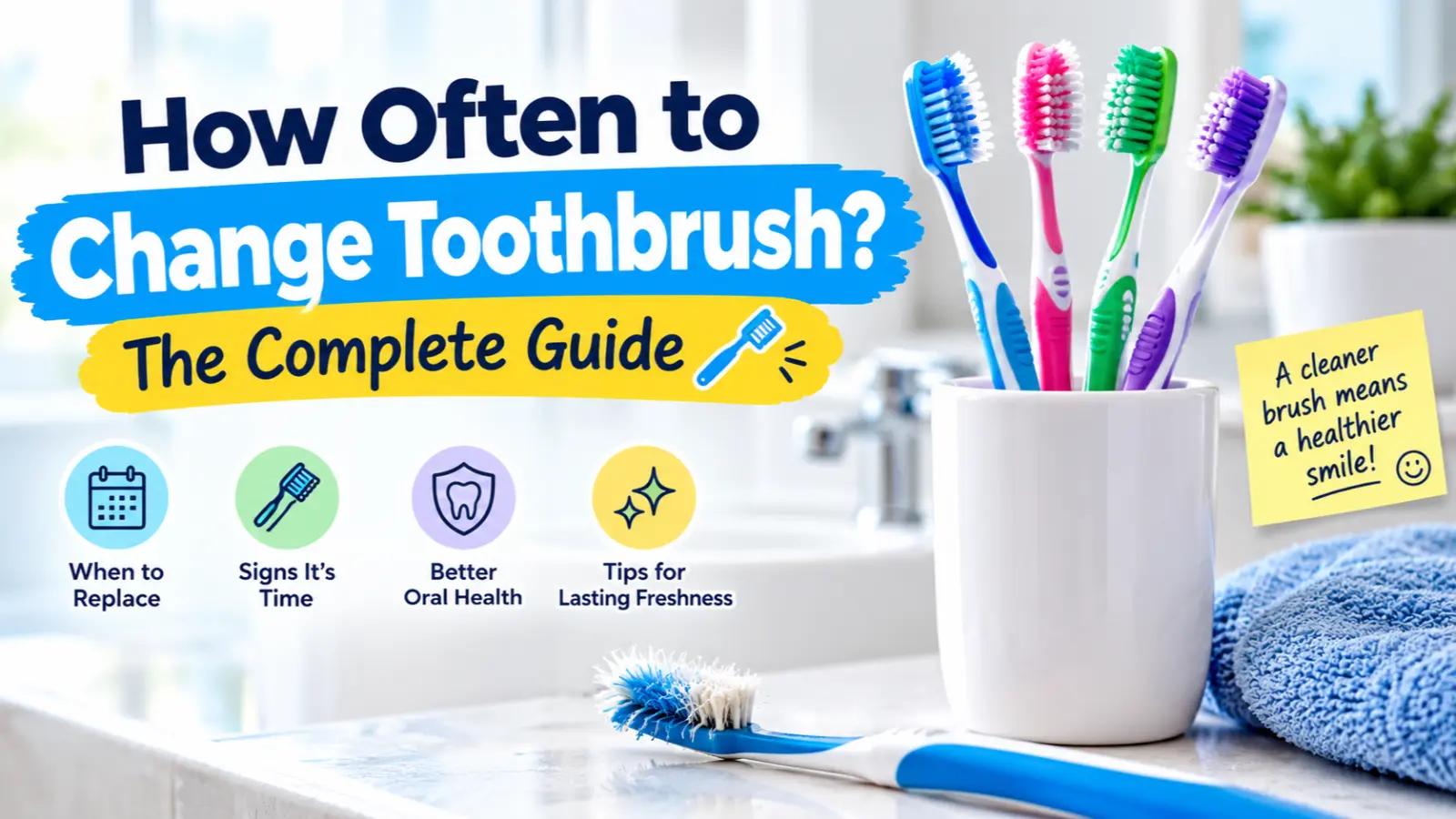
You should generally change your toothbrush every three to four months, according to the American Dental Association (ADA).
Replace it sooner if the bristles become frayed, matted, bent, or worn.
The same general replacement interval applies to replaceable electric toothbrush heads.
Key Takeaways
- 🪥 Replace your toothbrush approximately every 3–4 months.
- Replace it sooner if the bristles become frayed, flattened, or damaged.
- The general recommendation also applies to replaceable electric toothbrush heads.
- Choose a soft-bristled toothbrush and brush gently.
- Rinse your toothbrush after use, store it upright, and let it air dry.
- You do not automatically need to throw away your toothbrush after every illness; the circumstances matter.
How Often Should You Change Your Toothbrush?
For most people, the simple answer is every three to four months.
The American Dental Association recommends replacing a toothbrush approximately every three to four months, or sooner if the bristles become visibly matted or frayed. As bristles wear down, the toothbrush becomes less effective at cleaning your teeth.
This recommendation applies to regular manual toothbrushes. For people who use an electric toothbrush, the replaceable brush head should also be changed according to its condition and the manufacturer’s instructions, with three to four months being a common general guideline.
The 3–4 Month Recommendation
If you brush twice a day, your toothbrush goes through repeated contact with your teeth, gums, toothpaste, water, and saliva.
Over time, the bristles can lose their original shape and become less effective.
That is why it is better not to wait until the toothbrush looks completely worn out before replacing it.
Why Bristle Condition Matters
The calendar is useful, but your toothbrush can sometimes need replacement earlier.
For example, if the bristles are already spreading outward after only a few weeks, continuing to use the brush until the three-month mark does not make much sense.
The ADA specifically recommends replacing a brush sooner when the bristles are matted or frayed.
💡 Tip: A simple way to remember your replacement date is to buy a new toothbrush at the beginning of January, April, July, and October.
Signs You Need to Replace Your Toothbrush Sooner
The three-to-four-month rule is a useful guideline, but you should also inspect your toothbrush regularly.
Look at the bristles after brushing. If they no longer look straight and intact, it may be time for a replacement.
Frayed or Splayed Bristles
One of the clearest signs is frayed or splayed bristles.
Instead of standing relatively straight, the bristles may spread outward in different directions.
This usually indicates that the brush has experienced enough wear to warrant replacement.
Flattened, Bent, or Damaged Bristles
You should also replace the brush if the bristles become:
- Flattened
- Bent
- Matted
- Broken
- Severely discolored
- Spread outward
- Noticeably worn
A worn toothbrush may not clean as effectively as a brush with properly functioning bristles.
If your toothbrush looks old even though you cannot remember when you bought it, checking the bristles is a practical first step.
The Brush Has Been Contaminated or Damaged
A toothbrush that has been dropped somewhere dirty, chewed by a pet, or otherwise contaminated may need to be replaced rather than simply rinsed.
The same applies if toothbrushes accidentally come into contact in a way that creates a hygiene concern.
⚠️ Important: Don’t wait for the bristles to become extremely damaged. The 3–4 month timeframe is a general replacement point, while significant wear is a reason to replace the brush earlier.
How Often Should You Change an Electric Toothbrush Head?
If you use an electric toothbrush, you generally replace the brush head, not the entire powered handle.
The replacement process is similar to changing a manual toothbrush: pay attention to the recommended interval and the condition of the bristles.
Many dental and consumer health resources use the three-to-four-month timeframe as a general guideline for replacement brush heads.
When to Replace the Brush Head
Replace the head when:
- The bristles are visibly frayed.
- The bristles have become flattened or splayed.
- Cleaning performance seems to have declined.
- The manufacturer’s replacement indicator says it is time.
- The head has been damaged or contaminated.
Some powered toothbrush heads include indicator bristles that change appearance as the head wears.
Do Electric Toothbrushes Last Longer?
The powered handle may last much longer than the brush head.
However, the part that actually contacts your teeth—the removable head—still experiences bristle wear.
So buying an electric toothbrush does not mean you can use the same brush head indefinitely.
🔑 Key Takeaway: With an electric toothbrush, think of the brush head as the part that needs regular replacement.
Should You Change Your Toothbrush After Being Sick?
This question is more complicated than simply saying, “Always throw it away after you are sick.”
Toothbrushes can harbor microorganisms, but the ADA notes that there is not evidence that the bacteria found on toothbrushes routinely cause adverse health effects.
The ADA also notes that people generally do not need to replace their toothbrush after an ordinary cold or flu, unless there are particular circumstances that make replacement sensible.
For example, extra caution may be appropriate when:
- Your toothbrush became contaminated.
- Your toothbrush came into contact with another person’s brush.
- You have specific health circumstances discussed with your dentist or doctor.
- The brush is already due for replacement.
If you are unsure about your particular situation, ask your dental professional.
💡 Tip: Being sick does not automatically mean your toothbrush must go in the trash. Consider the illness, your health circumstances, the condition of the brush, and your dentist’s advice.
How to Make Your Toothbrush Last Properly
Proper toothbrush care can help keep your brush clean and in good condition between replacements.
Rinse It After Brushing
After brushing, rinse the toothbrush thoroughly with tap water.
This helps remove remaining toothpaste and debris from the bristles.
You do not need to aggressively scrub or damage the bristles while cleaning the brush.
Store It Upright and Let It Air Dry
Store the toothbrush in an upright position and allow it to air dry.
Avoid routinely keeping a wet toothbrush inside a closed container. A moist, enclosed environment can encourage microbial growth.
If several toothbrushes are stored together, keep them separated so their bristles do not touch.
Don’t Share Your Toothbrush
Never share a toothbrush.
Sharing can exchange saliva, microorganisms, and other bodily fluids between people.
Each person should have their own toothbrush or brush head.
💡 Tip: The best everyday routine is simple: rinse, store upright, let it air dry, and replace it on schedule.
Does an Old Toothbrush Clean Your Teeth Less Effectively?
Yes, a worn toothbrush can become less effective at cleaning.
The ADA explains that toothbrush effectiveness decreases as bristles become worn. That is one reason the organization recommends replacing toothbrushes every three to four months or sooner when the bristles become matted or frayed.
A toothbrush is designed to help remove plaque and food debris from the surfaces of your teeth. If the bristles become significantly worn or misshapen, they may not perform as intended.
That does not mean every three-month-old toothbrush suddenly stops working on a particular day. The replacement recommendation is a practical guideline based on normal wear.
Why Soft Bristles Are Recommended
When choosing a new toothbrush, look for soft bristles.
The ADA recommends soft-bristled toothbrushes because they can clean effectively while helping reduce the risk of gum abrasion. Gentle pressure is also recommended rather than aggressive scrubbing.
The goal is not to brush harder.
The goal is to clean thoroughly and gently.
A Simple Toothbrush Replacement Schedule
If you want an easy routine, use this simple system:
| When | What to do |
| Every day | Rinse toothbrush after brushing |
| Every use | Brush gently with a soft-bristled brush |
| Every 3–4 months | Replace toothbrush or brush head |
| Before 3 months | Replace if bristles become frayed or badly worn |
| After contamination | Consider replacing the brush |
| With multiple toothbrushes | Keep them separated |
Forgetting the replacement date is common.
One easy solution is to write the purchase date somewhere you will remember, add a recurring calendar reminder, or replace your toothbrush at the beginning of every third or fourth month.
The ADA also provides brushing calendars that can help families keep track of oral-care routines.
🔑 Key Takeaway: You don’t need to guess. Three to four months is the general replacement window, while badly worn bristles mean you should replace the toothbrush sooner.
Frequently Asked Questions
How often should you change your toothbrush?
The American Dental Association recommends replacing your toothbrush every three to four months, or sooner if the bristles become visibly matted or frayed. A toothbrush with significantly worn bristles may not clean as effectively as intended.
Should you replace your toothbrush every 3 months?
Three months falls within the ADA’s recommended three-to-four-month replacement window. You can use that as an easy reminder, especially if you have trouble remembering when you last bought a toothbrush. Replace it sooner if the bristles become worn or frayed.
How long does a toothbrush last?
A typical toothbrush should be replaced approximately every three to four months. Its actual useful life can be shorter if the bristles become damaged, frayed, or matted before then.
How often should you change an electric toothbrush head?
A replaceable electric toothbrush head is commonly changed about every three to four months, or sooner if the bristles become worn. You should also follow the replacement guidance provided for your particular toothbrush head.
Should you replace your toothbrush after being sick?
Not necessarily. The ADA says you generally do not need to replace your toothbrush after a routine cold or flu unless there are specific circumstances that create additional concern. If your toothbrush was contaminated or you have particular health concerns, ask your dentist or doctor.
What happens if you don’t change your toothbrush?
Over time, toothbrush bristles can become worn, frayed, or matted. A worn brush may be less effective at cleaning your teeth. That is why dental guidance recommends replacing toothbrushes regularly rather than using the same brush indefinitely.
Conclusion
Knowing how often to change your toothbrush makes your oral-care routine easier to manage.
For most people, the general recommendation is to replace a toothbrush every three to four months. You should replace it sooner if the bristles become frayed, matted, flattened, or otherwise worn.
The same basic principle applies to replaceable electric toothbrush heads.
Between replacements, rinse your toothbrush thoroughly, store it upright, let it air dry, and never share it with another person.
Choose a soft-bristled brush and use gentle pressure when brushing.
Finally, remember that replacing your toothbrush is only one part of good oral hygiene. The ADA recommends brushing twice a day with fluoride toothpaste and cleaning between your teeth daily.

I’m Ella Punster, a pun expert, and I create witty, fun, and clever puns ono Punvio to make your day brighter. Explore my unique wordplay and join me in celebrating the joy of humor