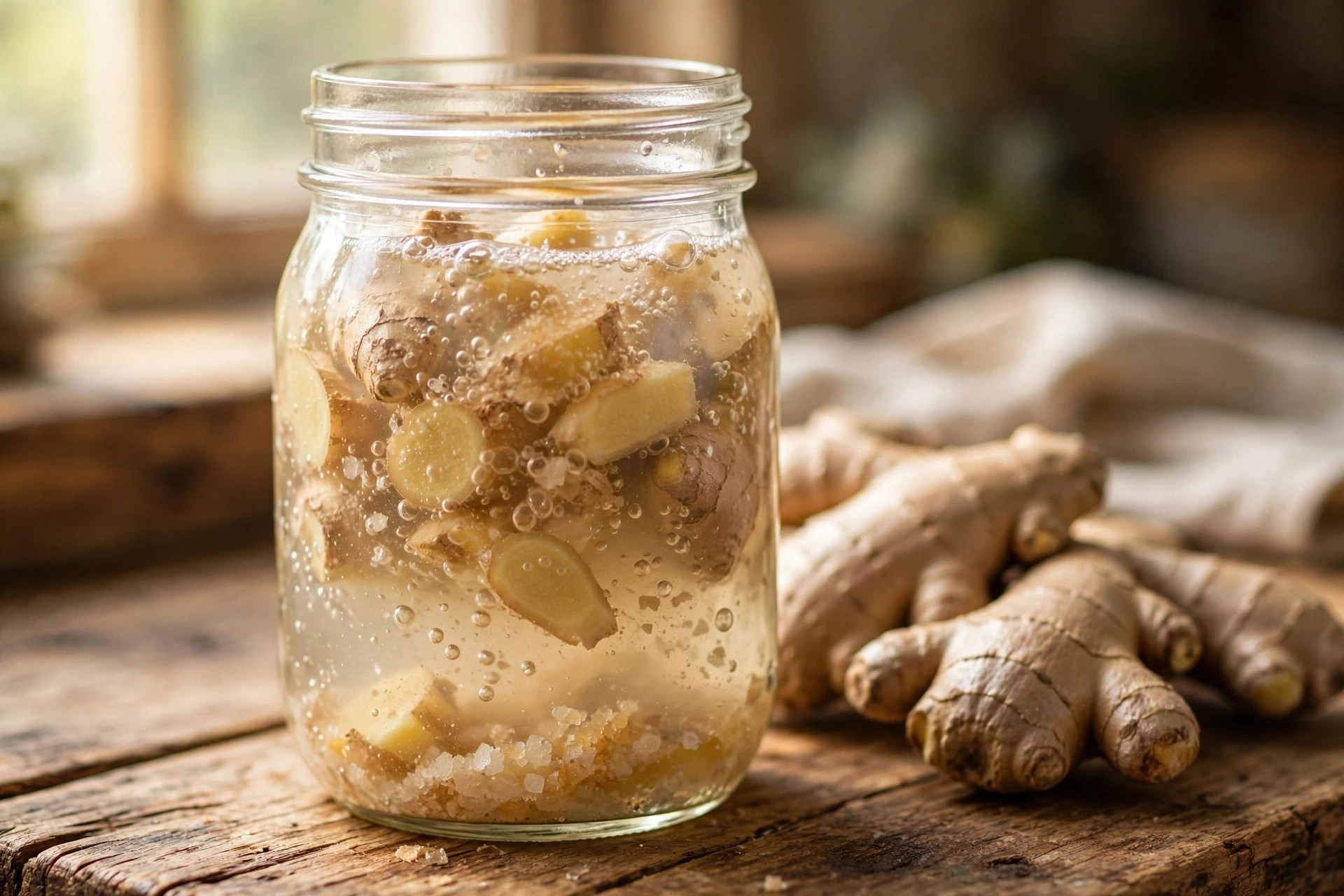
Making a ginger bug is easy: combine grated fresh ginger, sugar, and filtered water in a clean jar, then feed it one tablespoon each of ginger and sugar every day for 5 to 7 days. Once it starts fizzing and bubbling, you have a living starter culture that can naturally carbonate homemade sodas like ginger beer, fruit soda, and root beer. All it takes is a jar, organic ginger with the skin on, sugar, and a little patience.
Key Takeaways
- A ginger bug is a wild-fermented starter made from ginger, sugar, and water that naturally carbonates homemade sodas. 🫧
- Use organic, unpeeled ginger and chlorine-free filtered water for the most reliable fermentation.
- Feed your bug equal parts ginger and sugar every day for 5 to 7 days until it turns bubbly and fizzy.
- Keep it alive indefinitely by feeding it daily at room temperature or weekly in the fridge.
- Use about 1/4 cup of active bug per liter of sweetened juice or tea to brew naturally fizzy probiotic sodas. 🍋
1. What Is a Ginger Bug?
A ginger bug is a wild-fermented starter culture made from three simple ingredients: fresh ginger, sugar, and water. Think of it like a sourdough starter, but for soda instead of bread. The wild yeasts and bacteria naturally living on the ginger skin wake up when fed sugar and produce the carbon dioxide that makes homemade sodas fizzy.
Unlike store-bought soda made with forced carbonation, ginger-bug sodas are lightly fermented, gently fizzy, and full of live probiotics. One jar can supply you with ginger beer, fruit sodas, and lemonade for months. If you are new to fermentation, comparing your progress against a professional recipe can reassure you while your starter develops.
2. What You Need to Make a Ginger Bug
You probably have most of this already in your kitchen. Here is your simple shopping list:
- Fresh organic ginger, one or two roots, with the skin on
- Plain white sugar or organic cane sugar (about 1 cup total over the week)
- 2 cups of filtered or spring water (chlorine-free)
- A clean quart-size glass jar
- A coffee filter, paper towel, or clean cloth with a rubber band
- A non-metal spoon for stirring
Two ingredients need extra attention. First, the ginger: always use organic with the skin on, since the wild yeasts live on the peel. Conventional ginger is often irradiated, which kills those cultures. Second, the water: chlorine in tap water can stall fermentation, so use filtered or spring water. Alternatively, leave tap water uncovered on the counter for 24 hours to let the chlorine evaporate.
3. How to Make a Ginger Bug Step by Step
The process is wonderfully hands-off. You spend about two minutes a day feeding your bug, and the microbes do the rest.
1. Make the First Mix
Grate or finely chop 2 tablespoons of fresh ginger, skin on, and add it to your clean jar with 2 tablespoons of sugar and 2 cups of filtered water. Stir until the sugar dissolves, cover the jar with a coffee filter or cloth secured by a rubber band, and set it on your counter out of direct sunlight.
2. Feed It Every Day
Each day for the next 5 to 7 days, stir the mixture and add 1 tablespoon of fresh grated ginger plus 1 tablespoon of sugar. Stirring adds oxygen, which the wild yeasts need to multiply, so give the jar a good swirl at least once a day. Keep it somewhere warm, ideally 70 to 75°F.
3. Watch for the Bubbles
Around day 3 or 4 you should see tiny bubbles rising, especially right after stirring. By day 5 to 7, the liquid will look cloudy, fizz noticeably when stirred, and smell sweet and slightly yeasty. That is your sign the ginger bug is alive and ready.
4. Strain and Store Your Starter
Once your bug is active, you can strain out the ginger pieces or leave them in. Use it right away to carbonate soda, or put a loose lid on the jar and refrigerate it to rest until needed.
5. Use It to Make Homemade Soda
For a simple homemade ginger ale, mix sweetened ginger tea or fruit juice with about 1/4 cup of ginger bug per liter, bottle it in swing-top or plastic bottles, and leave it at room temperature for 2 to 3 days to carbonate. Then refrigerate and open carefully over the sink, because natural carbonation builds real pressure.
4. How to Keep Your Ginger Bug Alive
Your ginger bug can live indefinitely if you keep feeding it. If you make soda regularly, leave the jar on the counter and keep up the daily feed of ginger and sugar. If you brew occasionally, store it in the fridge and feed it 1 tablespoon each of ginger and sugar once a week.
Whenever you take liquid out to make soda, replace it with fresh filtered water and a spoonful of sugar so the culture never starves. After a long fridge rest, bring the bug to room temperature and feed it for a day or two until it bubbles again. A well-fed bug only gets stronger, and the soda it makes gets better too.
5. Troubleshooting Your Ginger Bug
Most ginger bugs work on the first try. Here is how to handle the most common problems.
- No bubbles after 7 days: The water may be chlorinated or the ginger may be non-organic and irradiated. Start a fresh batch with filtered water and unpeeled organic ginger.
- Fuzzy mold on top: If you see fuzzy mold, toss the batch and start over. Do not just scrape it off, since mold roots run deep.
- Smells like alcohol or acetone: Your bug is hungry. Feed it more sugar and stir well, or feed twice a day until the smell sweetens up.
- Sluggish in a cold kitchen: Move the jar somewhere warmer, like the top of the fridge or inside the oven with the light on, and give it an extra day or two.
6. Frequently Asked Questions
How long does it take to make a ginger bug?
Most ginger bugs become active in 5 to 7 days, though cool kitchens can stretch it to 8. It is ready when the liquid turns cloudy, fizzes when stirred, and smells sweet and slightly yeasty. If there are no bubbles by day 8, start fresh with filtered water and organic ginger.
Do I need to peel the ginger?
No. The wild yeasts that power the fermentation live on the ginger skin, so leaving it unpeeled is the secret to success. Just rinse organic ginger well before grating. Conventional ginger is often irradiated and lacks the wild cultures you need, so organic is strongly recommended.
Can I use honey, brown sugar, or coconut sugar instead of white sugar?
Plain white sugar or organic cane sugar ferments most cleanly and reliably. Honey has antibacterial properties that slow fermentation, while brown and coconut sugars can make the culture sluggish. Stick with simple sugar while building your starter.
Does ginger bug soda contain alcohol?
Yes, a tiny amount. Like all wild fermentation, a ginger bug produces trace amounts of alcohol, usually well under 1%, similar to kombucha or water kefir. The carbonated soda you make with it is a low-alcohol, family-friendly drink, though it is not completely alcohol-free.
Why is my ginger bug not bubbling?
The two most common culprits are chlorinated water and non-organic ginger. Chlorine can kill the microbes, and irradiated ginger has no wild yeast. Try a fresh batch with filtered water and unpeeled organic ginger, kept somewhere warm, around 70 to 75°F.
Conclusion
Your ginger bug is one of the most rewarding little projects in home fermentation. In under a week you will have a living starter that turns simple juice and sugar into fizzy, probiotic sodas whenever you want. Feed it well, keep it warm, and have fun experimenting with flavors. Happy brewing! ✨

I’m Daniel Moja, the expert behind Punvio.com, where I share the funniest, wittiest, and most creative puns to make your day brighter.
Explore my handpicked wordplay and laugh along with me!