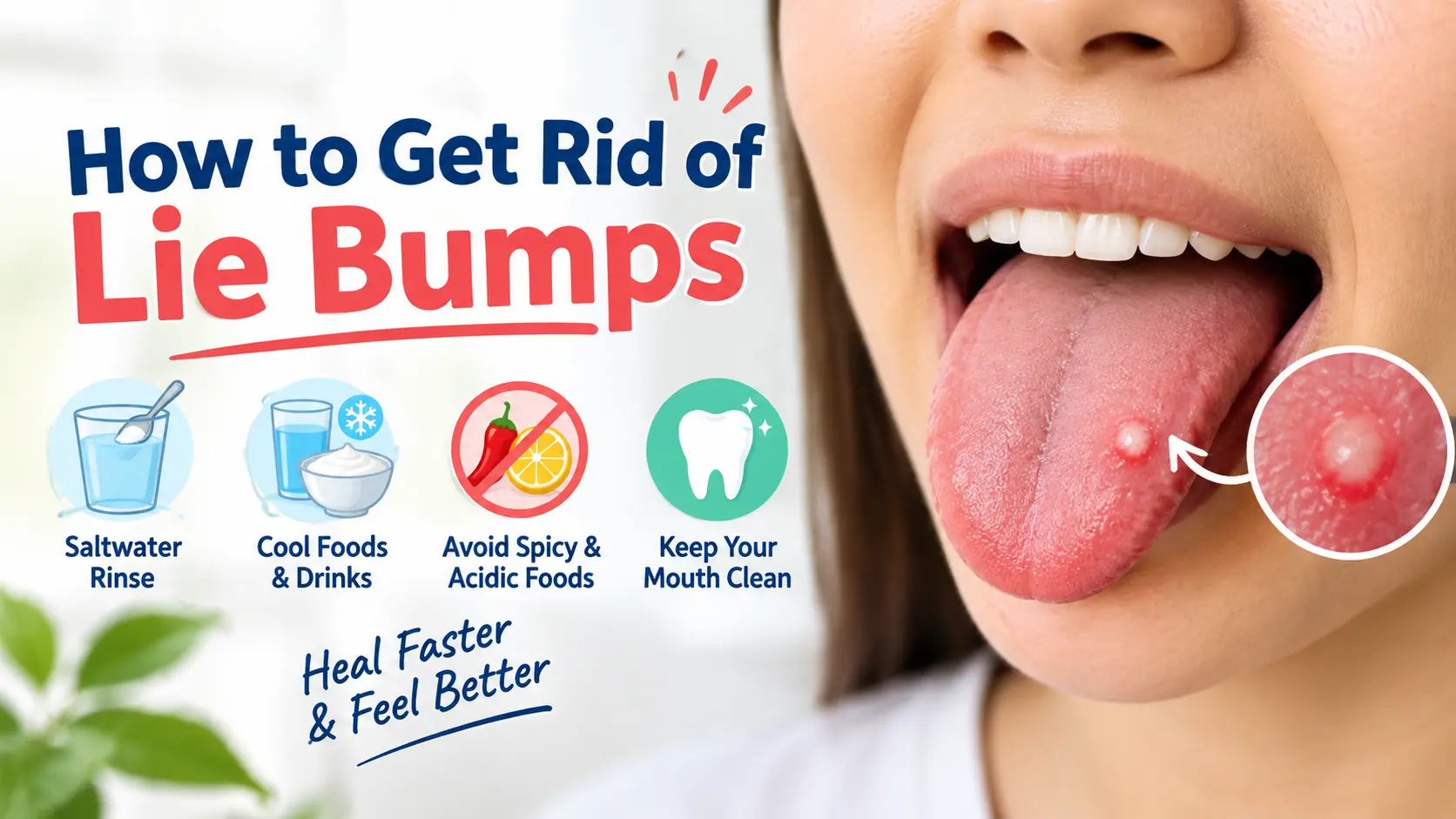
To get rid of lie bumps, rinse your mouth with warm salt water, drink cool fluids, eat soft foods, and avoid spicy or acidic foods that irritate your tongue. Keep your mouth clean and leave the bumps alone. Most lie bumps disappear without treatment within a few days, although persistent or unusual bumps may need a dental or medical examination.
Key Takeaways
- Lie bumps are small, inflamed bumps on the tongue, medically known as transient lingual papillitis.
- Saltwater rinses, cool drinks, and soft foods may help relieve discomfort.
- Avoid popping, scraping, or biting the bumps because this can cause further irritation.
- Most ordinary lie bumps improve within a few days.
- Seek professional advice if a bump lasts longer than two weeks, keeps returning, or has unusual symptoms.
1. What Are Lie Bumps?
Lie bumps are small red, white, or yellowish bumps that develop on the surface of your tongue. Their medical name is transient lingual papillitis. They occur when one or more fungiform papillae, the small structures on your tongue that contain taste buds, become inflamed.
These bumps may appear suddenly and cause pain, burning, tingling, or sensitivity when eating. They often develop near the tip or sides of the tongue, although other areas can be affected.
Despite their unusual name, lie bumps are not caused by telling lies. They are generally harmless and usually disappear without special treatment.
However, not every tongue bump is a lie bump. Persistent sores, white patches, and other unusual changes may have different causes and require an examination.
2. How to Get Rid of Lie Bumps
There is no guaranteed way to remove lie bumps immediately. The best approach is to reduce irritation, manage discomfort, and give the affected tissue time to heal.
1. Rinse With Warm Salt Water
A gentle saltwater rinse may soothe an irritated mouth and help keep it clean.
How to do it:
- Mix about half a teaspoon of salt into one cup of warm water.
- Swish the solution gently around your mouth.
- Spit it out instead of swallowing it.
- Repeat as needed if the rinse feels comfortable.
Use warm water rather than very hot water. If the mixture stings or makes the pain worse, stop using it.
Saltwater rinses may ease discomfort, but they are not a guaranteed cure for lie bumps.
2. Use Cold Water and Soothing Foods
Cold temperatures may temporarily reduce the burning sensation and make eating more comfortable.
Try drinking cool water, eating plain yogurt, or choosing other soft, cool foods that do not irritate your tongue. You can also let small ice chips melt in your mouth if they feel soothing.
Avoid anything that causes sharp pain or makes the bumps feel more irritated.
Tip: Choose foods that are cool, soft, and mild until your tongue feels better.
3. Avoid Spicy and Acidic Foods
Certain foods and drinks can aggravate inflamed tongue tissue. Spicy ingredients, citrus fruits, vinegar, and very salty foods may increase stinging or discomfort.
While the bumps heal, consider avoiding:
- Chili peppers and hot sauces
- Lemons, limes, and other highly acidic fruits
- Vinegar-based foods and dressings
- Very hot drinks or soups
- Hard, crunchy snacks that rub against your tongue
- Foods that you have noticed trigger your symptoms
You do not need to avoid every food on this list permanently. Focus on the items that cause irritation and return to your normal diet as your tongue improves.
4. Keep Your Mouth Clean
Good oral hygiene helps maintain a healthy mouth while the tongue heals.
Brush your teeth gently twice a day with fluoride toothpaste and clean your tongue carefully without rubbing the affected area aggressively. Drink enough water to prevent your mouth from becoming uncomfortably dry.
If a particular toothpaste or mouthwash seems to trigger irritation, consider stopping that product temporarily and discussing alternatives with a dentist.
Avoid harsh mouthwashes or products that cause burning. More aggressive cleaning will not make lie bumps disappear faster.
5. Avoid Touching or Popping the Bumps
Lie bumps may resemble pimples, but they are not ordinary skin pimples. They involve inflamed structures on the tongue, so squeezing them will not remove the underlying problem.
Do not pop, cut, scrape, or repeatedly rub the bumps. These actions can injure the tongue and increase irritation.
Instead, leave the affected area alone and use gentle measures to manage discomfort.
6. Identify Possible Triggers
If lie bumps appear repeatedly, consider what happened shortly before they developed.
Potential triggers include accidental tongue biting, friction from braces, irritating foods, stress, and reactions to certain oral-care products. In some cases, a clear cause cannot be identified.
Keep a simple record of recurring episodes, including foods eaten, new dental products, and any recent tongue injury. This may help you recognize patterns.
If the bumps keep returning, a dentist or healthcare professional can help determine whether something else is causing the problem.
7. Consider Pain Relief When Appropriate
If lie bumps are particularly uncomfortable, an over-the-counter pain reliever may help. Follow the product label and check with a pharmacist or healthcare professional if you have medical conditions, take other medicines, or are unsure which option is appropriate.
Do not place aspirin directly on your tongue or gums, as this can damage the tissue.
Prescription treatments are not usually needed for typical lie bumps. If the pain is severe or makes eating and drinking difficult, seek professional advice rather than experimenting with strong mouth treatments or steroid products on your own.
3. What Causes Lie Bumps?
Lie bumps develop when one or more tongue papillae become inflamed. Researchers have not established one cause for every case, but several factors may contribute.
Common possible triggers include:
- Minor injuries: Biting your tongue or repeatedly rubbing it against your teeth can cause irritation.
- Food irritation: Spicy, acidic, or very hot foods may aggravate sensitive tongue tissue.
- Stress: Some people notice episodes during stressful periods, although stress is not a proven cause in every case.
- Oral-care products: Certain toothpastes, mouthwashes, or whitening products may irritate the mouth.
- Dental appliances: Braces and other appliances can rub against the tongue.
- Other health factors: Infections, allergies, and inflammatory conditions may be associated with some tongue symptoms.
These are possible associations, not proof that a particular trigger caused your bumps.
The name “lie bumps” comes from an old superstition that bumps develop when someone tells a lie. There is no scientific evidence supporting that belief.
4. How Long Do Lie Bumps Last?
Most typical lie bumps improve within a few days. Some disappear within hours, while others may take about a week to settle completely.
The healing time depends on the severity of irritation and whether the tongue continues to encounter the trigger. Repeated friction or irritating foods may make symptoms last longer.
| Symptom or situation | What to expect |
|---|---|
| Mild, typical lie bumps | Often improve within a few days |
| Pain or burning | Usually eases as inflammation settles |
| Repeated irritation | May prolong discomfort |
| Bumps lasting over two weeks | Should be professionally evaluated |
| Severe swelling or breathing difficulty | Requires emergency medical attention |
You do not need to wait for two weeks if symptoms are severe or getting worse. The two-week mark is a reason to arrange an examination, not a rule that you must wait before seeking help.
5. How to Prevent Lie Bumps
Although lie bumps cannot always be prevented, a few everyday habits may reduce irritation and help you identify personal triggers.
- Brush gently and maintain a consistent oral-care routine.
- Avoid biting, scraping, or repeatedly rubbing your tongue.
- Limit foods that reliably trigger burning or irritation.
- Use toothpaste and mouthwash that do not cause discomfort.
- Drink water regularly, especially when your mouth feels dry.
- Ask your dentist to check braces or dental appliances that repeatedly rub your tongue.
- Track recurring episodes so you can discuss possible triggers with a professional.
If the bumps return frequently, do not assume that every episode has the same cause. Recurrent or persistent tongue changes deserve a proper assessment.
6. When Should You See a Doctor?
Typical lie bumps are usually temporary, but other conditions can also cause tongue bumps, sores, or patches. A dentist or healthcare professional can examine the area and determine whether additional testing or treatment is needed.
Arrange an appointment if:
- A bump or unexplained mouth lesion lasts longer than two weeks.
- The bumps keep returning or gradually become worse.
- You notice a persistent white or red patch, a hard lump, or an unexplained ulcer.
- Pain makes it difficult to eat or drink.
- You develop fever, swollen lymph nodes, or other symptoms alongside the bumps.
- You are unsure whether the problem is actually a lie bump.
Important: Seek emergency care if your tongue or throat swells rapidly or you have difficulty breathing or swallowing. These symptoms can indicate a serious problem and should not be treated as ordinary lie bumps.
A healthcare professional may diagnose typical transient lingual papillitis by examining your tongue and asking about your symptoms, medical history, and possible triggers.
7. Frequently Asked Questions
How do you get rid of lie bumps quickly?
The safest approach is to reduce irritation rather than try to remove the bumps. Rinse gently with warm salt water, drink cool fluids, choose soft foods, and avoid spicy or acidic ingredients. Most typical lie bumps improve on their own within a few days, but no home remedy guarantees overnight results.
Can lie bumps disappear overnight?
Some mild lie bumps may improve within hours, but others take several days to heal. There is no reliable method that makes every lie bump disappear overnight. Avoid irritating the area and give your tongue time to recover.
Can you pop a lie bump?
No. Lie bumps are caused by inflammation of tongue papillae, not by the same process that causes ordinary pimples. Popping, cutting, or scraping them can injure your tongue and worsen irritation. Leave them alone and use gentle measures to relieve discomfort.
Are lie bumps contagious?
Typical transient lingual papillitis is not generally considered contagious. However, some other conditions that cause tongue bumps or sores may be infectious. If you have fever, multiple unusual lesions, or other concerning symptoms, consult a healthcare professional instead of assuming the bumps are harmless.
Are lie bumps caused by lying?
No. The idea that lying causes tongue bumps is a myth. The nickname comes from an old superstition. Lie bumps are associated with inflammation of the tongue’s papillae, which may be triggered by irritation or other factors.
Do lie bumps mean you have an infection?
Not necessarily. Typical lie bumps often occur without a confirmed infection and usually resolve without treatment. However, infections and other oral conditions can also cause tongue changes. If you have persistent bumps, fever, worsening pain, or unusual patches, get them evaluated.
Conclusion
Learning how to get rid of lie bumps starts with keeping your tongue comfortable and avoiding further irritation. Gentle saltwater rinses, cool drinks, soft foods, and good oral hygiene may help relieve symptoms while the affected tissue heals.
Most typical lie bumps disappear within a few days without special treatment. Avoid popping or scraping them, and pay attention to foods or oral-care products that seem to trigger discomfort.
If a bump lasts longer than two weeks, repeatedly returns, or looks unusual, arrange an examination with a dentist or healthcare professional. Seek emergency care for rapid tongue swelling or difficulty breathing.
With gentle care and attention to warning signs, you can manage ordinary lie bumps safely while knowing when it is time to seek professional help.

I’m Daniel Moja, the expert behind Punvio.com, where I share the funniest, wittiest, and most creative puns to make your day brighter.
Explore my handpicked wordplay and laugh along with me!