We have all been there. Someone tells a joke and the whole room erupts. Then you try to retell the exact same joke later, and all you get is polite silence and someone checking their phone. Learning how to tell jokes is not about memorizing more punchlines – it is about delivery, timing, and understanding what makes a joke work in the first place.
The good news is that joke-telling is a craft with real techniques you can practice. Professional comedians do not rely on luck; they rely on structure, rehearsal, and reading their audience. In this guide, you will learn the anatomy of a great joke, a step-by-step method for telling jokes that land, and the delivery secrets that separate forgettable joke-tellers from unforgettable ones.
Quick Answer
To tell jokes well, learn the joke cold, slow down your delivery, and pause right before the punchline. Match the joke to your audience, commit to it with confidence, and never explain it afterward. Great joke-telling is 30 percent material and 70 percent timing, confidence, and reading the room.
What Makes a Joke Work?
A joke works when it creates a surprise the brain enjoys. The setup leads listeners down one path, and the punchline yanks them onto a completely different one. That sudden twist is what triggers laughter. Scientists call this the benign violation theory: something feels a little wrong or unexpected, but also safe, so the brain rewards you with a laugh.
This is why context matters so much. The same joke can kill in one room and die in another, because humor depends on shared expectations. A joke about office life lands with coworkers who live that reality every day. Tell it to people outside that world, and the surprise has nothing to twist against. Understanding this is the first real step in learning how to tell jokes that actually land.
The Anatomy of a Great Joke
Every joke, from a one-liner to a five-minute story, has the same skeleton: setup, tension, and punchline.
The setup gives the audience just enough information to form an expectation. Keep it short and clear. Every extra detail is a chance to lose people, so cut ruthlessly. “A man walks into a bar” works because it instantly creates a scene with zero wasted words.
The tension is the quiet build-up. It can be a pause, a list that keeps growing, or a story heading somewhere obvious. Tension makes the audience lean in. They think they know where this is going, and they are enjoying the ride.
The punchline breaks the pattern. It reinterprets everything that came before in an unexpected way. The bigger the gap between expectation and reality – while still making sense – the bigger the laugh. Study any joke you love and you will find this three-part structure hiding inside it.
How to Tell Jokes: 9 Steps From Setup to Applause
Step 1: Know the joke cold. Nothing kills a joke faster than forgetting the middle. If you stumble, backtrack, or say “wait, let me start over,” the tension evaporates. Practice until you can tell it naturally without thinking about the words.
Step 2: Cut it to the bone. Before telling any joke, remove every word that is not earning its place. Long setups bore people. Aim for the shortest version that still makes sense. If a detail does not build tension or set up the twist, delete it.
Step 3: Start with confidence. Your opening line sets the contract. Say it like you know it is going to be good. Nervous, apologetic joke-telling (“this is probably not funny, but…”) tells the audience not to laugh before you even begin.
Step 4: Slow down. Beginners rush because silence feels awkward. Fight that urge. A relaxed pace gives the audience time to picture the scene and build expectation. The science of laughter shows that anticipation is a huge part of what makes the release of a punchline feel so good.
Step 5: Pause before the punchline. This is the single most powerful technique in joke-telling. Deliver the setup, stop for one full beat, make eye contact, then hit the punchline. That pause is where the magic lives. It signals that something is coming and makes the twist land twice as hard.
Step 6: Commit to the punchline. Deliver the final line clearly and with energy. Do not mumble it, rush it, or laugh through it yourself. Say it like it is the most natural thing in the world, then stop talking. Let the laugh happen.
Step 7: Read the room as you go. Watch faces during the setup. If people look confused, you may need to simplify. If they look ahead of you, jump to the punchline faster. Great joke-tellers adjust in real time instead of running on autopilot.
Step 8: Handle the flop gracefully. Every joke-teller bombs sometimes, including professionals. If a joke dies, smile, shrug, and move on with total confidence. Saying something like “tough crowd, I will send my invoice anyway” can rescue the moment better than the original joke would have.
Step 9: Never explain the joke. If someone did not get it, let it go. Explaining a punchline is like dissecting a frog – you understand it better, but the frog dies in the process. Just move on to the next bit of conversation.
Timing and Delivery: The Secret Sauce
Timing is what turns words on a page into laughter in a room. The two tools that matter most are pace and pause. Vary your speed: quicken slightly through a list to build momentum, then slow down right before the twist. Think of it like a roller coaster – the climb is slow, the drop is sudden.
Your voice is an instrument. A slight change in tone can signal a character, and dropping your volume before the punchline pulls people in closer. Gestures help too, but keep them simple. One well-timed raised eyebrow beats wild arm-waving every time.
Also, match your energy to the room. A loud, high-energy delivery works at a party but feels wrong at a dinner table. The best joke-tellers calibrate: they bring the joke to the audience’s level instead of demanding the audience come to theirs.
Reading the Room: Match the Joke to the Moment
Before you open your mouth, scan the situation. What is the mood? Who is here? What do you all have in common? A joke about deadlines lands perfectly with stressed coworkers and terribly with strangers at a wedding.
Consider sensitivities as well. The golden rule: punch up or punch sideways at shared situations, never down at individuals. Jokes about traffic, technology, Mondays, and your own mishaps are nearly always safe. Jokes about someone’s appearance, background, or personal struggles are never worth the risk.
When in doubt, go with observational humor about the immediate situation. Something funny about the event you are all attending will always beat a random memorized joke, because it is fresh, relevant, and shared.
Mistakes That Ruin Good Jokes
The most common mistake is telegraphing the punchline. If your setup makes the twist obvious, there is no surprise left, and without surprise there is no laugh. Keep a straight face and a neutral tone through the setup.
Second, do not step on your own laugh. Talking over the audience’s laughter to start the next joke wastes the best moment. Let the laugh breathe, enjoy it, then continue.
Third, avoid the apology opener. “I am bad at telling jokes, but…” is a self-fulfilling prophecy. And finally, do not repeat a joke to the same audience hoping for a better result. Once is a performance; twice is a plea.
Key Takeaways
- Learn the joke cold: stumbling through the middle kills the tension.
- Pause right before the punchline: that silence makes the laugh bigger.
- Great joke-telling is 30 percent material and 70 percent timing and confidence.
- Match the joke to the room: shared experiences always land hardest.
- Never explain a joke. Smile, move on, and try the next one.
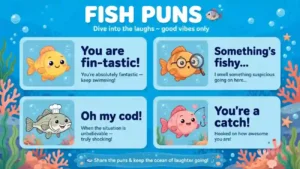
Joke-Telling Puns to Practice Your Delivery
- I told a joke about a broken pencil. It had no point, much like my delivery the first time.
- Why did the joke-teller bring a stopwatch on stage? Perfect timing is everything.
- I tried telling jokes in an elevator. It was an uplifting experience with several ups and downs.
- My friend said my joke delivery was too fast. I told him to slow down and listen twice.
- What do you call a joke that everyone gets? A real crowd-pleaser, and my personal goal.
- I paused before my punchline for dramatic effect. The audience thought I forgot it. Still got a laugh.
- Why was the comedian great at gardening? He really knew how to plant a punchline.
- I told a chemistry joke at the lab party. There was no reaction, which was honestly the perfect reaction.
- My grandpa’s jokes are timeless. He has been telling the same ones since before time had a name.
- I asked the audience for feedback on my set. They said, “Encore!” so I did the whole thing again, slower.
FAQs
How do I remember jokes better?
Do not memorize word for word. Instead, remember the structure: the setup image, the direction it seems to go, and the twist. When you know the logic of a joke, you can retell it naturally in your own words every time.
What should I do if I forget the punchline halfway?
Stay calm and confident. You can laugh it off with a line like, “And then… I forgot the ending, which is honestly the funniest part.” Audiences forgive forgetfulness when you handle it with charm. Then move on.
How long should a joke be?
As short as possible. For casual conversation, aim for under 30 seconds from setup to punchline. Longer stories can work, but only if every sentence earns its place. When in doubt, cut it in half.
Can I tell jokes I found online?
For casual use with friends, yes, but make them your own by adapting the details to your life. For any kind of performance or published content, always create original material. Borrowed structures are fine; borrowed jokes are not.
How do I know if a joke is appropriate?
Use the spotlight test: would you still tell it if the subject of the joke were standing right in front of you, smiling? If yes, you are fine. If you hesitate, pick a different joke. Safe targets include yourself, shared situations, and universal annoyances.
Why do professional comedians make it look so easy?
Because they rehearse relentlessly. What looks effortless is usually the result of telling the same joke hundreds of times and refining every pause. You are seeing the final product, not the years of practice behind it.
Conclusion
Knowing how to tell jokes is really about respecting the craft behind the laugh. Learn your material, cut the fat, slow down, pause before the payoff, and read your audience like a pro. Remember that delivery outweighs content nearly every time – a simple joke told brilliantly will always beat a brilliant joke told poorly. Start small: pick one joke this week, polish it using the nine steps above, and try it on a friendly audience. Then do it again. Before long, you will be the person everyone hopes speaks up, because they know something funny is coming.

I’m Ella Punster, a pun expert, and I create witty, fun, and clever puns ono Punvio to make your day brighter. Explore my unique wordplay and join me in celebrating the joy of humor