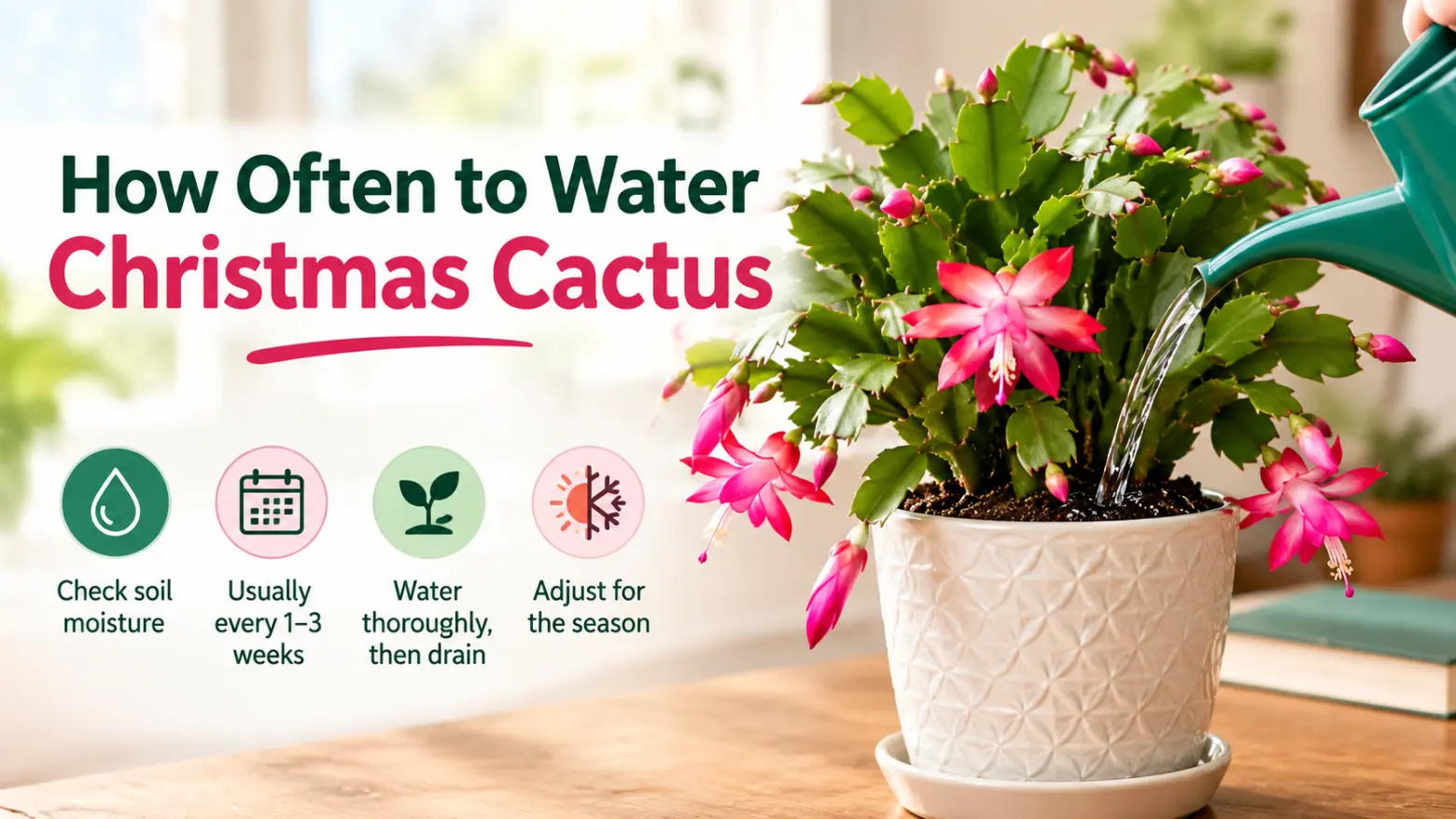
You should water a Christmas cactus when the top 1–2 inches of potting soil feel dry, rather than following a strict calendar.
Depending on light, temperature, humidity, pot size, and season, this may mean watering roughly every 1–3 weeks.
Always water thoroughly and let excess water drain away completely.
Key Takeaways
- 🌵 Check the soil moisture before watering instead of watering automatically on a fixed day.
- 💧 Water thoroughly when the top 1–2 inches are dry.
- ☀️ Your cactus may need water more often during active growth and less often during its resting period.
- 🪴 Always use a container with drainage holes and never leave the plant sitting in water.
- 🌸 During budding and flowering, avoid letting the plant become extremely dry or staying constantly soggy.
1. How Often Should You Water a Christmas Cactus?
The simplest answer is: water your Christmas cactus when the soil has dried enough—not simply because a certain number of days have passed.
For many indoor Christmas cacti, checking the plant about once a week is a useful routine. Depending on household conditions, actual watering may be needed every 1–3 weeks. Light, temperature, humidity, container size, and the type of potting mix can all change how quickly the soil dries.
The Soil Test Matters More Than the Calendar
Push your finger about 1–2 inches into the potting mix.
- If the soil feels moist, wait and check again later.
- If the soil feels dry at that depth, it is generally time to water.
- If the entire pot is staying wet for a long time, check the drainage and potting mix.
This approach is more reliable than saying every Christmas cactus must be watered every seven, ten, or fourteen days.
Tip: 🌱 Use the calendar as a reminder to check your cactus, not as an automatic watering command.
Typical Watering Frequency
There is no single schedule that works for every home.
A Christmas cactus in a warm room with bright indirect light may dry faster than one in a cool, humid room. A small pot may also dry faster than a large container.
As a general starting point, many indoor plants may need watering somewhere around every 1–3 weeks, but soil moisture should determine the actual timing.
2. Why Christmas Cactus Needs Different Watering
The word “cactus” can be misleading.
Christmas cactus is a tropical, forest-dwelling plant rather than a desert cactus. In its natural environment, holiday cacti grow in humid rainforest conditions, often in tree branches or rocky areas where water can drain away quickly.
That means you should not treat a Christmas cactus like a desert plant that can remain completely dry for long periods.
At the same time, its roots should not remain in saturated soil.
It Is Not a Typical Desert Cactus
Christmas cactus prefers a balance:
Moist enough to avoid prolonged dryness + well-drained enough to prevent soggy roots.
This is why watering too frequently can be just as problematic as forgetting to water for too long.
Why Drainage Matters
Good drainage is essential.
University extension guidance recommends allowing excess water to drain freely and avoiding standing water around the roots. Prolonged wet conditions can contribute to root problems, particularly during cooler periods.
Important: 🪴 A drainage hole is not optional for healthy Christmas cactus care. After watering, excess moisture should be able to escape from the container.
3. Christmas Cactus Watering Schedule by Season
Your Christmas cactus does not necessarily need the same amount of water throughout the year.
Its growth cycle and your home’s conditions affect how quickly the potting mix dries.
| Season | General approach |
|---|---|
| Spring | Check regularly and water when the soil becomes dry |
| Summer | Check more frequently as warmth can increase drying |
| Fall | Gradually reduce watering as the plant prepares for flowering |
| Winter/Blooming | Keep moisture reasonably consistent without keeping soil soggy |
| After flowering | Water less frequently during the rest period |
These are general guidelines rather than strict dates or intervals. Extension sources specifically recommend adjusting watering according to soil dryness and seasonal growth.
Spring and Summer
During active growth, the plant may use water more quickly.
Check the soil regularly and water once the appropriate portion of the potting mix has dried. A warm room, stronger indirect light, or lower humidity can cause the mix to dry faster.
Fall
Watering often needs to be reduced as temperatures and growth patterns change.
Fall is also an important period for flower-bud formation. Avoid swinging between extremely dry soil and heavily saturated soil.
Winter and Blooming
A flowering Christmas cactus still needs water.
However, the goal is even, moderate moisture—not constantly wet soil. Avoid allowing the plant to become extremely dry while buds or flowers are developing, but do not compensate by watering excessively. Missouri Botanical Garden notes that both overwatering and excessive drying can contribute to flower-bud drop.
After Flowering
After flowering, many holiday cacti benefit from a period of reduced watering.
Penn State Extension recommends watering less frequently after blooming, while other university extension guidance similarly advises reducing watering during the rest period.
Key Takeaway: 🌸 Your Christmas cactus generally needs more attention to moisture during active growth and flowering, while watering can be reduced after blooming.
4. How to Tell When Your Christmas Cactus Needs Water
Instead of guessing, use a few simple checks.
Finger Test
The easiest method is to place your finger about 1–2 inches into the soil.
If that area feels dry, your plant may be ready for watering. If it still feels damp, give it more time.
This method is particularly useful because the same plant can dry at different rates throughout the year.
Pot Weight
You can also learn to judge moisture by lifting the container.
A pot that feels noticeably lighter than it does immediately after watering may have lost a significant amount of moisture.
This takes practice, but it can become a quick way to monitor your plant.
Plant Appearance
Your plant can also provide clues.
A thirsty Christmas cactus may develop:
- Wrinkled or shriveled segments
- Limp growth
- Dry-looking foliage
- Premature bud drop in some circumstances
However, limp or wilted growth does not automatically mean the plant needs more water. Overwatering and damaged roots can also cause a plant to look weak.
5. How to Water a Christmas Cactus Correctly
Knowing when to water is only half the job. The way you water matters too.
How Much Water to Use
When the soil is sufficiently dry, water thoroughly so the potting mix is moistened throughout.
Then allow excess water to escape through the drainage holes.
Avoid giving the plant tiny amounts of water repeatedly if the potting mix has become dry. Thorough watering followed by proper drainage is generally a better approach.
Top Watering Method
Place the plant where excess water can drain freely.
Slowly water the potting mix until water begins to come out of the drainage holes.
Allow the pot to drain completely before returning it to its usual location.
What to Do With Drainage Water
If your container sits in a saucer, empty the collected water rather than allowing the pot to remain in it.
Missouri Extension specifically warns that standing water can create a soggy root environment and increase the risk of root rot.
Tip: 💧 Water thoroughly, then let the excess drain away. The goal is moist soil with good drainage—not standing water.
6. Signs of Overwatering vs. Underwatering
One of the most confusing Christmas cactus problems is figuring out whether a limp plant is thirsty or receiving too much water.
Signs of Overwatering
Possible warning signs include:
- Soft or unusually limp segments
- Yellowing or unhealthy-looking growth
- Soil that remains wet for an extended period
- A persistently soggy potting mix
- Root problems caused by poor drainage
Overwatering is especially concerning when the container has poor drainage or the plant repeatedly sits in standing water.
Signs of Underwatering
A plant that is too dry may show:
- Wrinkled or shriveled segments
- Limp growth
- Very dry potting soil
- Bud or flower problems
If the soil is bone dry, check the plant thoroughly rather than simply adding small amounts of water every day.
The Important Difference
The soil gives you an important clue.
Dry soil + shriveled plant = possible underwatering.
Wet soil + limp plant = possible overwatering or root stress.
Do not assume that every wilted Christmas cactus needs more water.
7. How Watering Changes During Budding and Blooming
Christmas cactus can be especially sensitive to changes while flower buds are developing.
Once buds appear, try to maintain reasonably stable growing conditions. Avoid repeatedly allowing the plant to become extremely dry and then soaking it heavily.
Missouri Botanical Garden notes that both excessive dryness and overwatering can contribute to flower-bud drop, while sudden environmental changes can also cause problems.
Keeping Moisture Consistent
Check the soil regularly during the budding and flowering period.
If the upper layer has dried sufficiently, water thoroughly and allow drainage.
If it is still moist, wait.
This creates a more consistent moisture pattern without keeping the roots continuously wet.
Preventing Bud Drop
Watering is only one part of preventing bud drop.
Sudden changes in temperature, drafts, humidity, light, or location can also contribute to flowers or buds falling from the plant.
8. Common Christmas Cactus Watering Mistakes
1. Watering Every Week Automatically
A weekly reminder is useful, but watering every week regardless of soil moisture can lead to overwatering.
2. Treating It Like a Desert Cactus
Christmas cactus has different environmental needs from desert cacti. Its rainforest origins mean it should not be left bone-dry for extended periods.
3. Leaving the Pot in Water
Always empty excess water from the saucer or outer container.
4. Using a Container Without Drainage
A decorative container can look attractive, but trapped water can create serious root problems.
5. Watering a Limp Plant Without Checking the Soil
A limp plant can be either too dry or suffering from excessive moisture. Check the soil first.
6. Following an Exact Number of Days
“Every 7 days” or “every 14 days” should never replace checking the actual plant.
Important: 🌿 The healthiest watering schedule is the one that responds to your plant’s soil and environment, not a universal calendar.
9. Frequently Asked Questions
How often should you water a Christmas cactus?
Water when the top 1–2 inches of soil feel dry. Depending on household conditions, this may happen approximately every 1–3 weeks, but the interval can be shorter or longer. Always check the soil before watering.
How do you know when a Christmas cactus needs water?
Check the potting mix with your finger. If the upper 1–2 inches feel dry, it is generally time to water. If the soil is still damp, wait. Wrinkled segments can also indicate dryness, but appearance alone is not enough to diagnose watering needs.
How much water does a Christmas cactus need?
Water thoroughly enough to moisten the potting mix and allow excess water to drain through the bottom of the container. Do not leave the pot sitting in collected water.
Should you water a Christmas cactus while it is blooming?
Yes. A blooming Christmas cactus still needs water, but the soil should not remain soggy. Check moisture regularly and water when the appropriate portion of the soil has dried. Avoid extreme swings between severe dryness and excessive moisture.
How often should you water a Christmas cactus in winter?
Winter watering depends on room temperature, humidity, light, pot size, and whether the plant is blooming. Rather than using a fixed winter schedule, check the soil and water when it has dried sufficiently. After flowering, watering is generally reduced during the plant’s rest period.
Can you overwater a Christmas cactus?
Yes. Constantly wet soil and standing water can damage roots and contribute to root rot. Good drainage and allowing the soil to dry appropriately between waterings are important parts of Christmas cactus care.
Why is my Christmas cactus limp even though I water it?
Limp growth does not always mean the plant needs more water. Check the soil first. If it is extremely dry, underwatering may be involved. If it is consistently wet, excessive moisture or root problems may be contributing to the limp appearance.
10. Conclusion
The best answer to how often to water Christmas cactus is not a fixed number of days. Instead, check the potting mix regularly and water when the top 1–2 inches feel dry.
For many indoor plants, that may work out to roughly every 1–3 weeks, but conditions vary considerably. Your cactus may dry faster in a warm, bright room and more slowly in a cool or humid environment.
Water thoroughly when needed, allow excess water to drain completely, and never leave the pot sitting in water. Reduce watering after flowering, while paying close attention to moisture during budding and blooming.
Once you learn to read the soil rather than simply follow a calendar, Christmas cactus watering becomes much easier—and your plant can reward you with healthy growth and beautiful seasonal flowers.

I’m Daniel Moja, the expert behind Punvio.com, where I share the funniest, wittiest, and most creative puns to make your day brighter.
Explore my handpicked wordplay and laugh along with me!