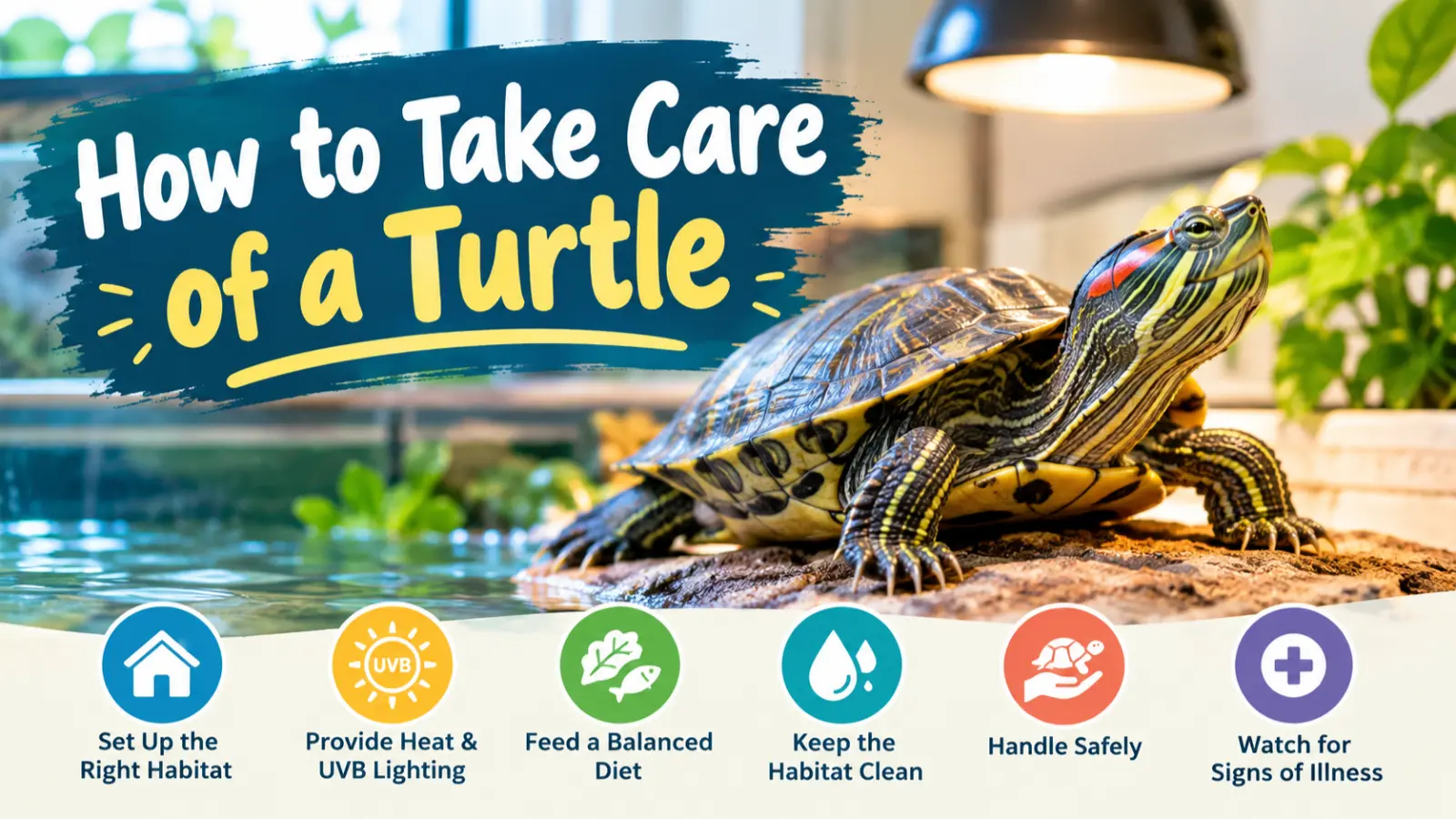
To take care of a turtle, provide a species-appropriate habitat, proper temperature, UVB lighting, clean water when required, a balanced diet, and regular habitat cleaning.
Aquatic turtles need swimming and dry basking areas, while terrestrial turtles need suitable land-based space.
Always follow care requirements for your specific species and consult a reptile veterinarian when health problems appear.
Key Takeaways
- 🐢 Identify the species first because turtle care varies considerably.
- 💡 Most indoor turtles need appropriate UVB lighting and controlled heat.
- 🥬 Feed a species-appropriate, balanced diet rather than relying on one food.
- 💧 Aquatic turtles need clean, filtered water and a dry basking area.
- 🧼 Wash your hands after handling a turtle or cleaning its habitat because turtles can carry Salmonella.
- 🩺 Get veterinary help if you notice persistent changes in appetite, movement, breathing, eyes, or shell condition.
1. Know What Type of Turtle You Have
The first step in learning how to take care of a turtle is identifying exactly what kind of turtle you own.
Not all turtles have the same habitat, temperature, humidity, or dietary requirements. An aquatic turtle such as a red-eared slider spends much of its time in water and needs a swimming area, while a terrestrial turtle or tortoise needs a land-based habitat.
Aquatic turtles
Aquatic and semi-aquatic turtles commonly kept as pets include red-eared sliders and painted turtles. They generally need:
- A large aquatic habitat
- Clean, appropriately treated water
- A dry basking platform
- UVB lighting
- A heat source
- A reliable filtration system
- Species-appropriate food
For aquatic turtles, habitat size also needs to increase as the turtle grows. PetMD and Petco both note that a commonly used guideline is about 10 gallons of habitat space per inch of turtle length, although the correct setup depends on species and enclosure design.
Terrestrial turtles and tortoises
Land-dwelling turtles and tortoises have different requirements. They need suitable ground space, hiding areas, appropriate humidity or dryness for their species, a temperature gradient, UVB exposure, and access to clean drinking or soaking water.
Tip: Never choose a habitat based only on your turtle’s current size. Plan for its adult size and species-specific needs.
2. Set Up the Right Turtle Habitat
A turtle’s enclosure is much more than a container. It should allow the animal to perform normal behaviors such as moving, hiding, feeding, basking, and, for aquatic species, swimming.
Habitat size
Choose the largest practical enclosure that fits your turtle’s adult needs.
Aquatic turtles produce substantial waste, so a larger volume of water can make maintaining good water quality easier. A strong filter is also important because turtles can quickly dirty their habitat.
Water and swimming area
Aquatic turtles need clean water that is appropriate for their species and maintained at the correct temperature.
Use a reliable thermometer rather than guessing the temperature. Water should also be treated appropriately when necessary to remove chlorine or other substances harmful to aquatic animals.
A filter is essential for many aquatic turtle setups. VCA recommends avoiding substrates such as loose sand or gravel that a turtle may swallow, potentially causing an intestinal obstruction.
Basking area
Aquatic turtles also need a completely dry area where they can climb out of the water and bask.
The basking platform should be stable and easy for the turtle to reach. It should also be positioned so the turtle can move away from the heat when it becomes too warm.
Substrate and hiding places
The safest substrate depends on the species.
Avoid small pieces of gravel or other materials that your turtle can easily swallow. Provide safe hiding areas or environmental enrichment appropriate for the species.
3. Provide Proper Heat and UVB Lighting
Proper lighting is one of the most important parts of indoor turtle care.
Turtles use UVB exposure to help their bodies produce vitamin D3, which is important for calcium metabolism and healthy bones and shells. Inadequate UVB exposure can contribute to metabolic bone disease.
Indoor turtles generally need a dedicated reptile UVB setup according to the manufacturer’s instructions and the needs of the species.
Many aquatic-turtle care guides recommend roughly 10–12 hours of UVB exposure per day. UVB bulbs also lose effectiveness over time even when they still produce visible light, so follow the manufacturer’s replacement schedule.
The basking area also needs an appropriate heat source.
Don’t guess at temperatures. Use thermometers to measure the actual basking and environmental temperatures.
Because different species require different temperature ranges, follow a species-specific care guide or advice from a reptile veterinarian.
Important: Glass and plastic can block useful UVB radiation. The UVB setup must therefore be positioned according to the bulb manufacturer’s specifications and the turtle’s enclosure design.
4. Feed Your Turtle a Balanced Diet
Food requirements vary by species and age, so there isn’t one perfect diet for every turtle.
Aquatic turtle diet
Many aquatic turtles are omnivores. Young turtles often require proportionally more animal protein, while adults generally consume more plant matter.
A suitable diet may include:
- Commercial aquatic turtle pellets
- Appropriate leafy vegetables
- Species-appropriate plant foods
- Earthworms or other suitable animal foods
- Occasional appropriate treats
PetMD recommends using commercial turtle food as part of the diet while also considering the turtle’s natural diet and individual needs.
VCA notes that aquatic turtles eat and swallow underwater, which is one reason some owners feed them in a separate container of appropriate warm water to reduce contamination of the main habitat.
Terrestrial turtle diet
Land turtles and tortoises can have very different diets from aquatic turtles.
Depending on species, their food may include appropriate leafy greens, vegetables, grasses, weeds, flowers, commercial diets, and sometimes animal protein.
Do not assume that lettuce, fruit, insects, or commercial pellets alone provide everything your turtle needs.
Feeding mistakes to avoid
Avoid feeding a turtle a repetitive diet simply because it seems to enjoy one food.
Also avoid making major dietary changes without checking species-specific recommendations. Calcium and vitamin supplementation should be used carefully because excessive supplementation can also cause problems.
Key Takeaway: A healthy turtle diet is species-specific, varied, and nutritionally balanced rather than based on one favorite food.
5. Keep the Habitat Clean
Good hygiene is essential for both your turtle and your household.
For aquatic turtles, remove uneaten food and visible waste regularly. A properly sized filter can help maintain water quality, but filtration does not eliminate the need for water changes and habitat maintenance. Petco recommends regular partial water changes and periodic thorough cleaning for aquatic turtle habitats.
For terrestrial turtles, remove feces and uneaten food frequently and clean food and water containers regularly.
Keep cleaning equipment dedicated to the turtle’s habitat.
Most importantly, don’t clean turtle equipment in areas used to prepare food. The CDC specifically recommends keeping turtle equipment away from kitchens and cleaning it outside when possible.
6. Handle Your Turtle Safely
Many turtles tolerate handling, but they generally aren’t pets that need constant physical contact.
Allow a newly acquired turtle time to adjust to its new surroundings. Aquatic turtles in particular may become stressed by excessive handling.
When you need to pick up your turtle:
- Approach calmly.
- Support its body securely.
- Keep it close to a safe surface.
- Avoid dropping or squeezing it.
- Return it to its habitat when necessary.
Never kiss or snuggle a turtle.
Turtles can carry Salmonella even when they look healthy and clean. Wash your hands thoroughly with soap and water after touching, feeding, or caring for the turtle or its habitat.
This is especially important for households with young children, older adults, or people with weakened immune systems.
The CDC’s September 2026 update reported a multistate Salmonella outbreak associated with pet turtles, with 20 reported cases across 12 states at that time.
7. Watch for Signs of Illness
Turtles can hide signs of illness, so changes in normal behavior deserve attention.
Contact a veterinarian experienced with reptiles if you notice concerning symptoms such as:
- Persistent loss of appetite
- Unusual lethargy
- Difficulty swimming
- Trouble walking
- Swollen or irritated eyes
- Abnormal breathing
- Shell softening or unusual shell damage
- Persistent skin problems
- Major changes in normal behavior
Do not try to diagnose a serious turtle illness from internet photos alone.
A reptile veterinarian can evaluate the turtle and determine whether changes in habitat, diet, lighting, medication, or other treatment are necessary.
Tip: Keep your turtle’s enclosure conditions consistent and record temperatures, feeding habits, and unusual behavior. This information can be useful during a veterinary visit.
8. Common Turtle-Care Mistakes to Avoid
New turtle owners often underestimate how specialized turtle care can be.
Avoid these common mistakes:
❌ Keeping a turtle in a tiny tank
A small baby turtle may outgrow its enclosure surprisingly quickly. Plan for adult size.
❌ Skipping UVB lighting
Visible light isn’t necessarily enough. Turtles need appropriate UVB exposure as part of proper indoor husbandry.
❌ Letting water become dirty
Aquatic turtles produce significant waste. Filtration and regular maintenance are both important.
❌ Feeding only one type of food
A nutritionally incomplete diet can contribute to health problems.
❌ Using unsafe substrate
Small gravel and other loose materials may be swallowed.
❌ Handling too much
Turtles aren’t typically animals that need frequent handling.
❌ Ignoring hygiene
Always wash your hands after handling your turtle or anything in its environment.
❌ Releasing a pet turtle outdoors
Never release an unwanted pet turtle into the wild. Contact a reptile rescue, animal shelter, or other appropriate organization for rehoming options. The CDC also warns that releasing pet turtles can harm wildlife and may be illegal in some states.
Frequently Asked Questions
How do you take care of a pet turtle?
Provide a species-appropriate enclosure, proper heat and UVB lighting, suitable food, clean water when required, hiding or basking areas, and regular habitat maintenance. Because care differs significantly between species, identify the turtle before choosing its exact temperature, humidity, diet, and enclosure requirements.
What does a turtle need to survive?
A pet turtle needs appropriate food, water, shelter, temperature, lighting, and enough space to behave normally. Aquatic turtles additionally need swimming water and a dry basking area. Terrestrial turtles and tortoises require land-based habitats designed for their species.
Do turtles need a heat lamp?
Many indoor turtles need a heat source that creates an appropriate basking temperature. The exact temperature depends on the species. Use a thermometer to measure the enclosure rather than relying on the bulb’s advertised wattage alone.
Do turtles need UVB light?
Indoor turtles generally need appropriate UVB exposure. UVB helps turtles produce vitamin D3, which is important for calcium absorption and healthy bones and shells.
How often should you feed a turtle?
Feeding frequency depends on the turtle’s species, age, size, and diet. Juvenile aquatic turtles may require more frequent feeding than adults, while adult turtles often need less frequent feeding. Follow a species-specific feeding plan rather than using one schedule for every turtle.
Can you hold a pet turtle?
Yes, when necessary, but turtles generally do not need frequent handling. Handle them gently and wash your hands afterward. Avoid kissing or snuggling turtles because they can carry Salmonella.
Conclusion
Learning how to take care of a turtle starts with understanding that turtles aren’t all cared for in exactly the same way. Your turtle’s species, age, size, and natural lifestyle should determine its habitat, temperature, lighting, diet, and daily routine.
For aquatic turtles, focus on clean filtered water, adequate swimming space, a secure dry basking area, appropriate heat, and UVB lighting. For terrestrial turtles and tortoises, create a land-based habitat with suitable temperature, humidity, substrate, hiding areas, and species-appropriate food.
Regular cleaning and good nutrition are just as important as the initial habitat setup. And because turtles can carry Salmonella, safe handling and handwashing should be part of everyday care.
If you’re unsure about your turtle’s specific needs or notice signs of illness, consult a veterinarian experienced with reptiles. A properly designed habitat and consistent daily care can help your turtle remain healthy for many years.

I’m Daniel Moja, the expert behind Punvio.com, where I share the funniest, wittiest, and most creative puns to make your day brighter.
Explore my handpicked wordplay and laugh along with me!